
The Question Every Homeowner Asks First
You've been dreaming about a new kitchen for months—maybe years. You've browsed Pinterest boards, visited tile showrooms, and finally decided it's time. But before you commit, there's one question that comes up in almost every initial consultation we have at Walnut Street Contractors: How long is this actually going to take?
It's a fair question, and honestly, it's one that doesn't have a single clean answer. Every kitchen is different. A cosmetic refresh in a Pacific Beach condo is a completely different project than a full gut-and-reconfigure in a 1940s Mission Hills bungalow. But after years of remodeling kitchens across San Diego, we can give you a realistic framework so you're not caught off guard.
The Short Answer
Most full kitchen remodels take between 8 and 14 weeks from demolition to final walkthrough. Smaller cosmetic updates—think new countertops, a backsplash, and fresh paint—can wrap up in 3 to 5 weeks. Major reconfigurations that involve moving walls, relocating plumbing, or adding square footage can stretch to 16 weeks or more.
But here's the part most contractors leave out: the construction timeline is only half the story. The planning and pre-construction phase often takes just as long, sometimes longer.
Phase 1: Design and Planning (4–8 Weeks)
This is where the real work begins, even though nobody's swinging a hammer yet. During this phase, you'll be making decisions about layout, materials, finishes, appliances, and budget. If you're working with a designer or a design-build firm like ours, this is when floor plans get drawn, selections get finalized, and permits get submitted.
A few things that affect how long this phase takes:
- Decision fatigue is real. Choosing between 47 shades of white quartz takes longer than people expect. Give yourself grace here.
- Permit timelines vary. In San Diego, permit processing can take anywhere from a couple of weeks to over a month depending on the scope of work and the city's current backlog.
- Material lead times matter. Custom cabinetry can take 6 to 10 weeks to fabricate. Specialty tile imported from overseas might take even longer. Ordering early keeps your project on track.
Our advice? Don't rush this phase. The more thorough your planning, the smoother your construction phase will be.
Phase 2: Demolition and Rough Work (1–2 Weeks)
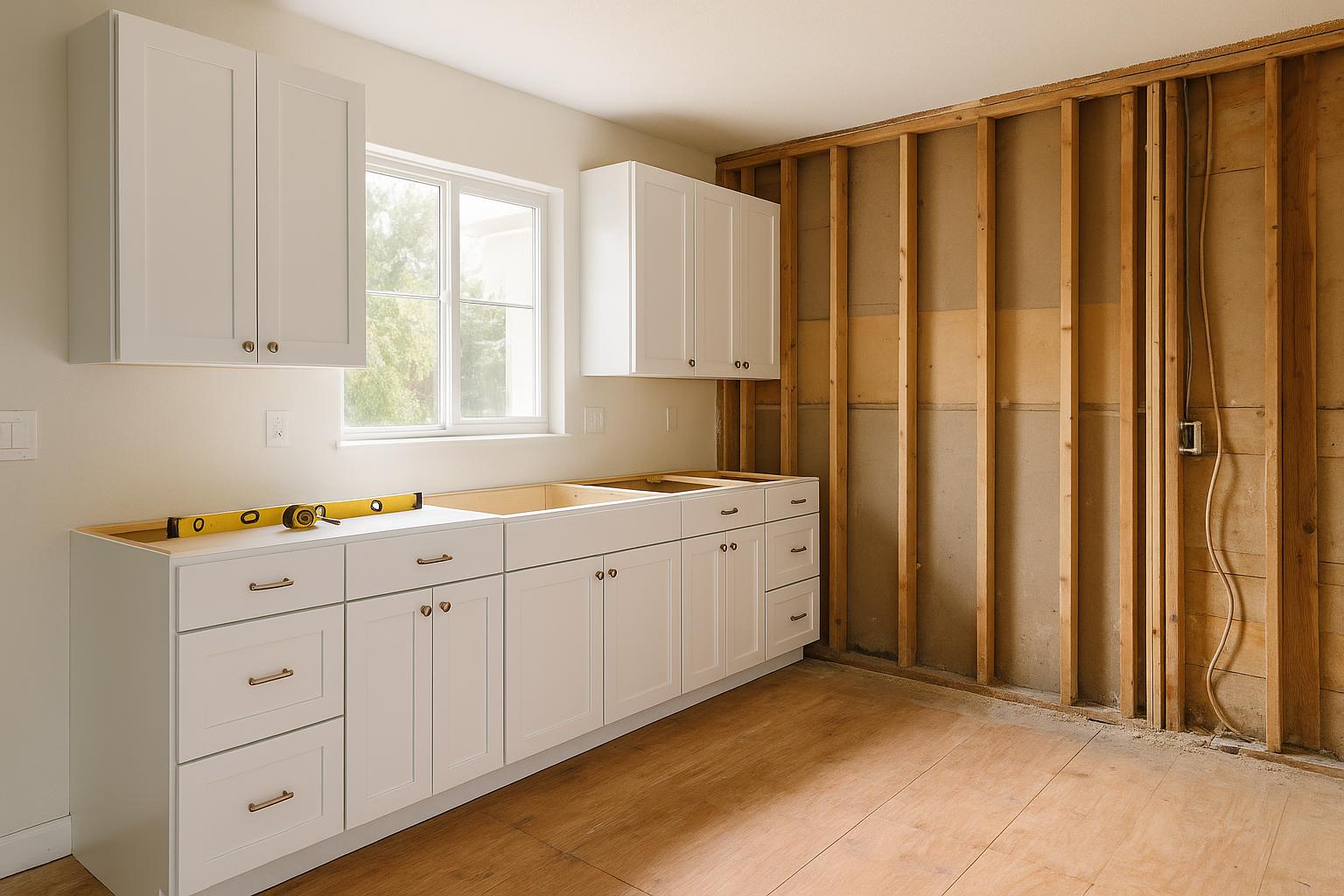
This is the exciting—and slightly terrifying—part. Old cabinets come out, flooring gets pulled up, and your kitchen suddenly looks like a construction zone. During this phase, the crew handles demolition and any structural changes like removing or modifying walls.
Rough plumbing, electrical, and HVAC work also happens here. If you're moving your sink to an island, adding under-cabinet lighting, or upgrading to a gas range, the behind-the-wall infrastructure gets installed now. This work needs to be inspected before anything gets closed up, so there's usually a brief pause while we wait for the city inspector.
Phase 3: The Build-Out (4–8 Weeks)
This is the longest stretch, and it's where your new kitchen starts taking shape. Here's a general sequence of what happens:
- Drywall and patching — Any opened walls get closed up, taped, and finished.
- Cabinet installation — This is a big milestone. Once cabinets go in, the kitchen suddenly starts to look like a kitchen again.
- Countertop templating and fabrication — After cabinets are set, the countertop fabricator comes out to template. Fabrication usually takes 7 to 10 business days.
- Countertop installation — Once the slabs are cut and polished, they get installed.
- Backsplash tile — Tile work happens after countertops are in place so everything lines up cleanly.
- Painting — Walls, trim, and ceilings get their final coats.
- Flooring — Depending on the material and layout, flooring may go in earlier or later in the sequence.
- Fixtures and appliances — Faucets, lighting, outlets, and appliances get connected and tested.
- Final details — Hardware, caulking, touch-ups, and a thorough cleaning.
Each of these steps depends on the one before it, which is why a well-managed schedule is so critical. One delayed material shipment can create a ripple effect through the rest of the project.
What Causes Delays (And How to Avoid Them)
No one wants their remodel to drag on longer than necessary. Here are the most common causes of delays we see in San Diego kitchen projects—and how to stay ahead of them:
- Late material selections. If you haven't chosen your tile or hardware by the time the crew needs it, work stops. Make your selections during the design phase, not during construction.
- Permit and inspection scheduling. City inspections are on the city's timeline, not yours. A good contractor builds buffer days into the schedule for this.
- Surprises behind the walls. Older homes in neighborhoods like North Park, Hillcrest, and La Jolla can hide outdated wiring, corroded pipes, or even previous unpermitted work. A contingency budget of 10 to 15 percent helps absorb these surprises without derailing the project.
- Change orders mid-project. Changing your mind about the layout after framing is done is expensive and time-consuming. It happens, but the more decisions you lock in early, the better.
Living Through a Kitchen Remodel
Let's be honest—living without a kitchen isn't fun. Here are a few tips from homeowners who've been through it:
- Set up a temporary kitchen station with a microwave, toaster oven, and electric kettle in another room.
- Use paper plates and disposable utensils to cut down on dishes you can't easily wash.
- Budget for more takeout than usual. San Diego has no shortage of great food, so at least there's a silver lining.
- If you have young kids, plan for the messiest and loudest phases to happen while they're at school or activities.
Most of our clients tell us the temporary inconvenience was absolutely worth it once they saw the finished result.
A Realistic Expectation Goes a Long Way
The biggest source of frustration in any remodel isn't the dust or the noise—it's mismatched expectations. When homeowners understand the real timeline upfront, the entire experience feels more manageable. You can plan your life around it instead of feeling like the project is running your life.
At Walnut Street Contractors, we walk every client through a detailed project schedule before we start. We flag potential bottlenecks, build in realistic buffers, and keep you updated every step of the way. That's how we've built trust with homeowners across San Diego County—by telling the truth about what it takes to do the job right.
If you're thinking about a kitchen remodel and want a straight answer about timeline and budget, reach out to our team. We're happy to talk through your project and give you a realistic picture of what to expect.